


The Annual iPhone Launch: Innovation or Conspicuous Consumption? A Sociological Reflection on Youth, EMI Culture, Status, and Society
Every September, millions of people across the world wait for Apple’s new iPhone launch. The event is celebrated almost like a global festival. Long queues outside stores, viral unboxing videos, influencer reviews, and social media excitement create a sense that owning the newest iPhone is a necessity rather than a choice.
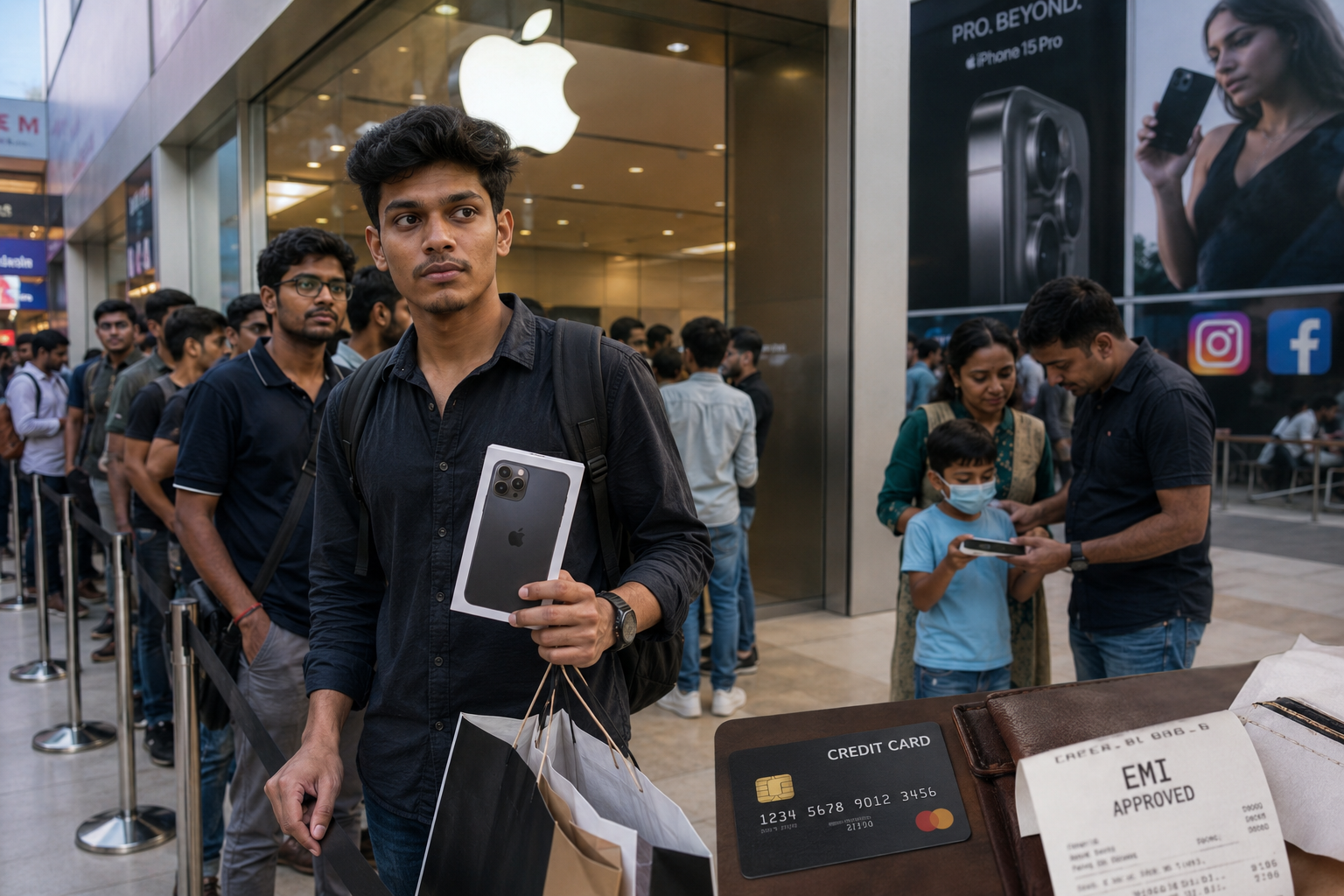
At one level, this is a remarkable story of technological innovation. At another, it reveals how modern capitalism transforms consumption into identity. Sociology helps us understand that people often buy products not only for utility but also for recognition, prestige, and belonging.
Technology has undoubtedly transformed human life positively. Smartphones improve communication, education, healthcare, digital payments, business opportunities, photography, and emergency services. Students access online education, entrepreneurs build businesses through social media, and families remain connected across continents. Innovation also generates employment in manufacturing, logistics, software, retail, and digital services.
| OTHER POSTS/PAGES | |
| UPSC SOCIOLOGY PYQS | UGC NET |
| GENERAL STUDIES | THINKERS OF SOCIOLOGY |
| CURRENT AFFAIRS | IGNOU NOTES |
| FREE NOTES | OTHER EXAMS |
| MICROTHEMES SOCIOLOGY | |
Apple itself has contributed significantly to technological advancement. Features such as powerful processors, privacy protections, satellite emergency communication, health monitoring, accessibility innovations, and ecosystem integration have influenced the entire smartphone industry. Competition forces other companies to innovate as well, benefiting consumers.
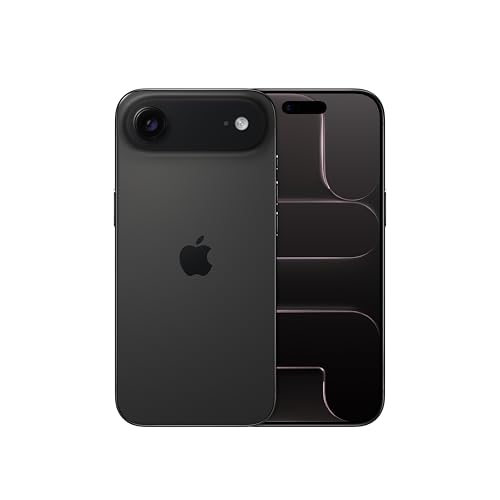
- SUPER THIN. STRIKINGLY LIGHT — The thinnest iPhone ever, with the power of a pro chip inside. At 5.6 mm, iPhone Air is s…
- MORE DURABLE THAN ANY PREVIOUS IPHONE — Ultralight titanium frame. Ceramic Shield protects the back of iPhone Air, makin…
- 18MP CENTER STAGE FRONT CAMERA — Flexible ways to frame your shot. Smarter group selfies, Dual Capture video for simulta…
Yet sociology asks an important question.
Why do millions replace perfectly functioning phones every year?
The answer often lies less in technology and more in society.
From Need to Desire
Classical economists assumed consumers make rational decisions.
Sociologists argue that consumption is deeply social.
People purchase goods not merely because they need them but because products communicate identity, class, taste, success, and status.
A smartphone becomes more than a communication device.
It becomes a social symbol.
Thorstein Veblen and Conspicuous Consumption
The American sociologist Thorstein Veblen introduced the idea of conspicuous consumption in The Theory of the Leisure Class (1899).
According to Veblen, affluent individuals consume expensive goods publicly to display wealth and social superiority.
Modern smartphones perfectly fit this theory.
Owning the newest iPhone often signals prestige rather than necessity.
Many buyers already possess fully functional devices.
The purchase becomes symbolic.
People are buying status.
Pierre Bourdieu: Taste and Distinction
French sociologist Pierre Bourdieu argued that consumption reflects cultural capital.
Brands become markers of distinction.
Owning an expensive phone communicates education, lifestyle, social class, and modernity.
Young people often believe certain brands make them appear intelligent, successful, or sophisticated.
The phone becomes part of one’s social identity.
Jean Baudrillard: The Consumer Society
Jean Baudrillard argued that people increasingly consume symbols rather than products.
An iPhone is not merely a phone.
It represents innovation.
Luxury.
Success.
Modernity.
Global belonging.
People often desire what the logo represents more than what the device actually does.
Karl Marx and Commodity Fetishism
Karl Marx described commodity fetishism, where social relationships become hidden behind commodities.
Consumers rarely think about the workers assembling smartphones, mining rare minerals, or environmental costs.
Instead, attention focuses entirely on branding and prestige.
The commodity appears magical.
Its production remains invisible.
Zygmunt Bauman and Liquid Modernity
Bauman described modern society as one of constant change.
Identity itself becomes temporary.
Consumers are encouraged to replace products continuously.
Nothing remains “new” for long.
The annual smartphone launch perfectly reflects this culture of permanent dissatisfaction.
The latest phone quickly becomes “old.”
Erving Goffman and Digital Identity
According to Goffman, social life resembles a stage where individuals perform identities.
Instagram, Snapchat, and TikTok amplify this performance.
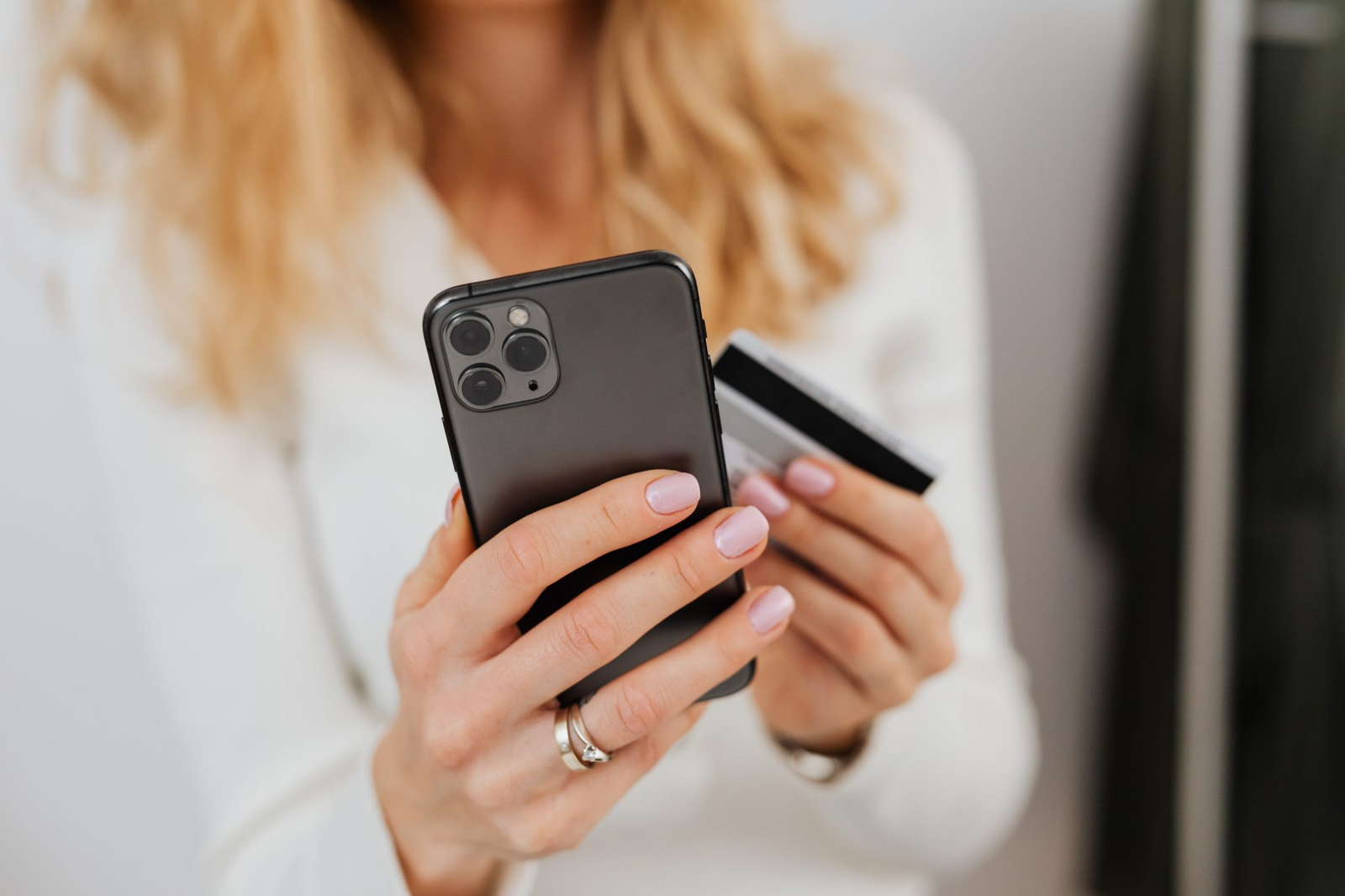
Expensive smartphones become props for presenting success.
Luxury consumption becomes part of everyday self-presentation.
George Herbert Mead
Mead argued that the self develops through interaction with others.
Young people increasingly define themselves through peer approval.
If friendship groups consider premium smartphones a symbol of acceptance, consumption becomes socially rewarding.
The purchase satisfies psychological needs for belonging.
The Rise of Trend Culture
Social media has transformed marketing.
Earlier, companies advertised products.
Today, consumers themselves become advertisers.
Influencers, celebrities, YouTubers, and creators generate continuous excitement around product launches.
Algorithms repeatedly expose users to “What’s New.”
Fear of Missing Out (FOMO) becomes a powerful marketing force.
Research on Social Media Influence
Research from the Pew Research Center consistently finds that teenagers spend several hours daily on digital platforms, where peer influence, advertising, and influencer culture significantly shape purchasing preferences.
Studies from universities such as Stanford, Oxford, and Harvard have also shown that repeated exposure to aspirational lifestyles increases materialistic values, especially among adolescents and young adults.
EMI Culture: Consumption Before Income
India has witnessed a massive expansion of consumer credit.
Buy Now, Pay Later (BNPL), zero-cost EMI, instant loans, and credit cards have reduced the psychological barrier to expensive purchases.
Consumers increasingly ask:
“How much is the monthly EMI?”
instead of
“Can I actually afford this?”
Debt becomes normalized.
Reserve Bank of India Trends
Recent RBI data show that retail lending, especially unsecured personal loans and credit card spending, has expanded rapidly over the past few years.
Credit cards in circulation have crossed 100 million in India.
Outstanding credit card balances have reached record levels.
Digital finance has made borrowing easier than ever before.
Convenience has increased.
So has financial vulnerability.
Behavioural Economics
Richard Thaler argues that people often underestimate future financial burdens.
Small monthly EMIs appear affordable.
But multiple EMIs together reduce savings, increase stress, and create long-term financial commitments.
Consumers experience immediate pleasure while postponing financial pain.
Youth and Consumer Identity
Young people are particularly vulnerable because adolescence is a period of identity formation.
Brands become tools for social acceptance.
Owning premium gadgets often influences friendships, dating, and peer recognition.
Some students even feel embarrassed using older phones despite identical functionality.
Consumption increasingly replaces character as a measure of success.
Relative Deprivation
Sociologist Samuel Stouffer introduced the idea of relative deprivation.
People compare themselves with those around them rather than with objective living standards.
A student with a perfectly functional phone may still feel deprived if classmates own newer models.
Social comparison fuels unnecessary consumption.
Poverty and Status
Ironically, conspicuous consumption is not confined to the rich.
Individuals from lower-income families may spend disproportionately on visible luxury goods to claim dignity and social recognition.
Status competition often pushes families into debt.
The poor sometimes consume luxury symbols while sacrificing education, nutrition, healthcare, or savings.
Max Weber
Max Weber argued that society contains status groups alongside economic classes.
Prestige often matters as much as income.
Modern smartphones increasingly function as markers of status.
Consumption becomes a pathway to symbolic social mobility.
Feminist Perspectives
Feminist scholars argue that consumer capitalism also shapes gender identities.
Women experience constant pressure to maintain beauty, fashion, and technological modernity.
Influencer culture frequently links expensive gadgets with attractiveness and social success.
This commercializes femininity.
📚 Explore More on Sociologus
Simone de Beauvoir
Beauvoir argued that women are often socially constructed through external expectations.
Digital consumer culture reinforces these expectations by encouraging women to constantly perform ideal lifestyles online.
Consumption becomes part of gender performance.
Naomi Wolf
Naomi Wolf’s The Beauty Myth demonstrates how commercial industries profit from insecurities.
Today, smartphone brands, beauty products, luxury fashion, and influencer marketing often reinforce similar pressures.
Consumption becomes linked with self-worth.
M. N. Srinivas
Srinivas explained Westernization as the adoption of Western lifestyles.
Premium global brands have become symbols of aspiration among India’s expanding middle class.
Consumption reflects cultural change.
Yogendra Singh
Yogendra Singh argued that modernization in India combines tradition with modern consumer culture.
Indian families increasingly adopt global lifestyles while retaining traditional social structures.
This creates hybrid identities.
Andre Béteille
Béteille reminds us that inequality today is not only about income.
Differences in lifestyle, education, technology, and consumption also shape social stratification.
Digital inequality creates new forms of exclusion.
📚 Explore More on Sociologus
Environmental Consequences
The annual replacement cycle has environmental costs.
The Global E-waste Monitor 2024 estimates that the world generated over 60 million tonnes of electronic waste annually, while only a small proportion is formally recycled.
Smartphones require lithium, cobalt, nickel, copper, and rare earth minerals.
Frequent upgrades accelerate resource extraction and environmental degradation.
Effects on Children and Babies
Consumer culture increasingly reaches infancy.
Parents now share baby photos online from birth.
Researchers describe this as “sharenting.”
Babies often receive digital identities before developing their own.
Studies by child development researchers warn that excessive parental smartphone use can reduce face-to-face interaction, eye contact, and responsive communication during infancy.
Developmental psychologists have linked frequent “technoference”—technology interrupting parent-child interactions—with weaker language development, attention regulation, and emotional bonding in early childhood.
Children also grow up observing consumption as normal.
Brands become familiar before values do.
A Culture of Endless Upgrading
The annual iPhone launch is therefore not merely about technology.
It represents consumer capitalism, digital identity, status competition, algorithmic influence, credit expansion, and symbolic consumption.
The smartphone has become a mirror reflecting contemporary society.
Conclusion
Innovation deserves celebration. Better technology improves lives, creates jobs, and expands opportunities. However, when identity becomes dependent on the latest product, consumption shifts from utility to social performance.
Veblen reminds us that consumption can display status. Bourdieu shows that brands create distinction. Marx exposes commodity fetishism. Baudrillard explains symbolic consumption. Bauman highlights endless upgrading. Weber emphasizes status. Feminist scholars reveal gendered consumer pressures, while Indian sociologists demonstrate how globalization reshapes aspirations.
The real question is therefore not “Should we buy the newest iPhone?”
It is “Who are we trying to impress—and at what social, financial, psychological, and environmental cost?”
Continue Your UPSC Journey with Sociologus
Explore our free Sociology Notes, Daily Current Affairs, PYQs, UGC NET Resources and UPSC Exam Preparation.
- Q. In what way does Queer Kinship challenge the Traditional Kinship System? Substantiate by giving Illustrations. (UPSC CSE Sociology Optional | 10 Marks)
- Q. How do Civil Society Organizations such as NGOs and Self-Help Groups contribute to Grassroot Level Social Changes? Discuss. (UPSC CSE Sociology Optional | 20 Marks)
- Q. What do you understand by Sustainable Development? Discuss the elements of Sustainable Development as proposed in the UNDP’s Sustainable Development Goals Report, 2015. (UPSC CSE Sociology Optional | 20 Marks)
- Q. What is the Nature of Relationship between Science and Religion in Modern Society? Analyze with Suitable Examples. (UPSC CSE Sociology Optional | 10 Marks)
- Q. How do Marx, Weber and Durkheim differ in Understanding Religion? Explain. (UPSC CSE Sociology Optional | 20 Marks)