

- Introduction
- FIFA World Cup as a Social Institution
- Emile Durkheim and Collective Consciousness
- FIFA World Cup and National Identity
- Karl Marx and the Political Economy of the FIFA World Cup
- Max Weber and Meaning in Sports
- FIFA World Cup and Entertainment Culture
- FIFA World Cup and Globalization
- FIFA World Cup and Social Media
- FIFA World Cup and Youth Culture
- FIFA World Cup and Social Integration
- FIFA World Cup and Consumer Society
- Criticisms from a Sociological Perspective
- Conclusion
Introduction
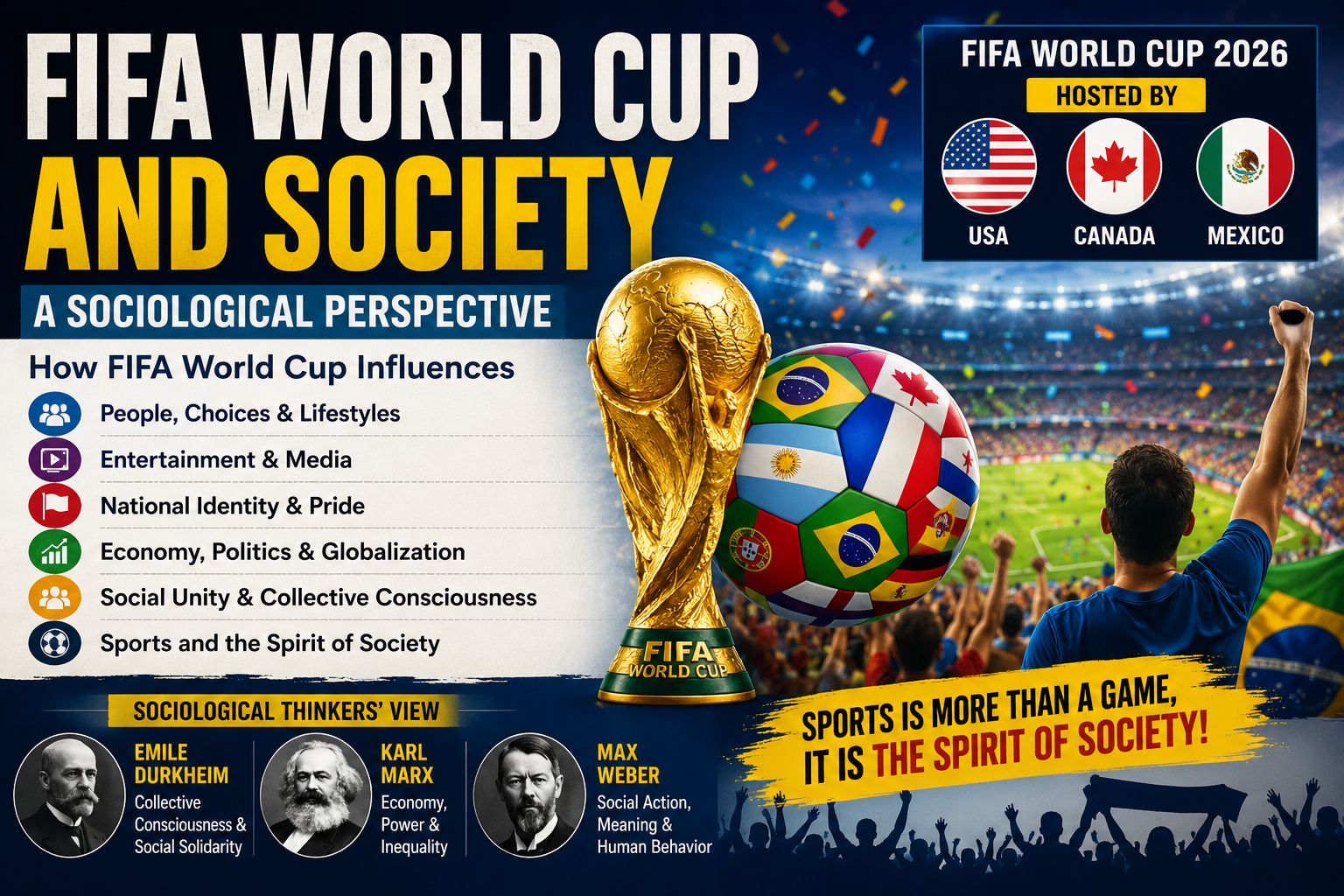
The FIFA World Cup is the world’s most prestigious football tournament and one of the largest sporting events ever organized. The upcoming 2026 FIFA World Cup will be jointly hosted by the United States, Canada, and Mexico, marking the first World Cup to be hosted by three nations. Every four years, the FIFA World Cup attracts billions of viewers, making it not only a sporting spectacle but also a major social phenomenon.
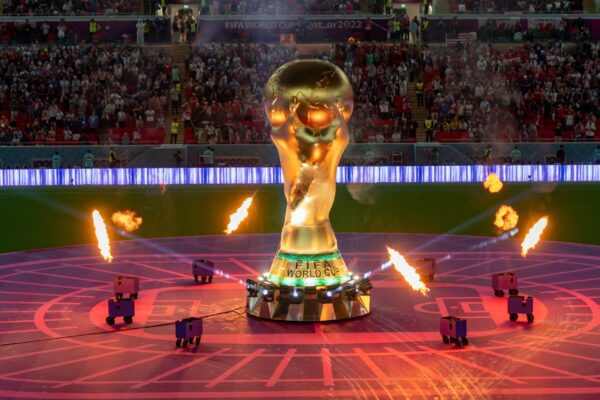
From a sociological perspective, the FIFA World Cup is much more than a football tournament. It influences people’s identities, lifestyles, entertainment preferences, consumption patterns, political discussions, national pride, and social relationships. Sociology helps us understand how the FIFA World Cup becomes a powerful social institution that reflects and shapes society.
FIFA World Cup as a Social Institution
In sociology, institutions are organized patterns of beliefs and behaviors that fulfill important social functions. Sports, particularly the FIFA World Cup, function as a social institution because they bring people together and create shared experiences.
According to sociology, society needs mechanisms that promote integration and social solidarity. The FIFA World Cup serves this purpose by connecting millions of people through a common passion for football.
For example, during a FIFA World Cup final, people from different classes, religions, ethnicities, and backgrounds gather to watch the same event. This demonstrates the unifying role of sports in society.
Emile Durkheim and Collective Consciousness
French sociologist Emile Durkheim argued that societies are held together by a collective consciousness—a shared set of beliefs and values.
The FIFA World Cup creates a form of collective consciousness. During the tournament, individuals experience common emotions, celebrations, and disappointments. Entire nations celebrate victories together and mourn defeats together.
When Argentina won the FIFA World Cup in 2022, millions of citizens celebrated in streets and public spaces. Such events strengthen social solidarity and collective identity.
From Durkheim’s perspective, the FIFA World Cup functions similarly to social rituals that reinforce social bonds.
FIFA World Cup and National Identity
One of the most important sociological dimensions of the FIFA World Cup is its role in shaping national identity.
People often identify strongly with their national teams. Supporting a football team becomes a way of expressing patriotism and national pride.
Examples include:
- Brazil’s football culture
- Argentina’s passion for football
- Germany’s disciplined football tradition
- Morocco’s representation of Arab and African identity
The FIFA World Cup allows nations to showcase their culture, values, and achievements on a global stage.
Sociology explains that national identity is socially constructed and reinforced through symbols, flags, anthems, and sporting events such as the FIFA World Cup.
Karl Marx and the Political Economy of the FIFA World Cup
Karl Marx viewed society through the lens of class conflict and economic power.
From a Marxist perspective, the FIFA World Cup is also an economic institution that generates enormous profits.
Major corporations invest billions in:
- Sponsorships
- Advertising
- Broadcasting rights
- Merchandise
- Tourism
The FIFA World Cup stimulates economic activity and creates employment opportunities. However, Marxist sociologists argue that economic benefits are often distributed unequally.
For example:
- Large corporations gain significant profits.
- Workers involved in infrastructure projects may receive limited benefits.
- Host cities sometimes face rising costs and displacement issues.
Thus, sociology highlights both the positive and negative economic impacts of the FIFA World Cup.
Max Weber and Meaning in Sports
Max Weber emphasized understanding human actions and motivations.
People do not watch the FIFA World Cup merely for entertainment. They watch because football carries symbolic meanings.
Some viewers watch because:
- Their family tradition supports a particular team.
- Their nation is participating.
- They admire specific players.
- Football represents personal identity.
For example, Lionel Messi’s journey inspired millions worldwide. Fans followed Argentina not only because of national identity but because Messi symbolized dedication and perseverance.
Weber’s sociology helps explain why the FIFA World Cup generates emotional attachments beyond the game itself.
FIFA World Cup and Entertainment Culture
Modern society places great importance on entertainment.
The FIFA World Cup influences:
- Television programming
- Social media discussions
- Streaming platforms
- Advertising campaigns
- Music and popular culture
During the FIFA World Cup, conversations in workplaces, schools, colleges, and social gatherings often revolve around football.
Popular World Cup songs become global hits, and players become cultural icons.
The FIFA World Cup therefore acts as a major cultural event that shapes entertainment patterns across societies.
FIFA World Cup and Globalization
Globalization is one of the most important concepts in sociology.
The FIFA World Cup represents globalization in action.
During the tournament:
- People consume the same media content worldwide.
- Different cultures interact.
- International tourism increases.
- Global brands market products across continents.
A match between Brazil and Germany can be watched simultaneously by audiences in India, Africa, Europe, and North America.
The FIFA World Cup demonstrates how modern technology connects societies across geographical boundaries.
FIFA World Cup and Social Media
Digital sociology highlights the growing influence of online platforms.
Today, the FIFA World Cup extends beyond stadiums into:
- X (Twitter)
- YouTube
- TikTok
Fans create online communities and virtual identities through football.
Hashtags, memes, and discussions become part of everyday social interactions.
The FIFA World Cup has transformed into a digital social experience where millions participate regardless of physical location.
FIFA World Cup and Youth Culture
Young people are particularly influenced by the FIFA World Cup.
The tournament shapes:
- Fashion trends
- Sports participation
- Career aspirations
- Role models
Many children begin playing football after watching the FIFA World Cup.
Players such as:
- Lionel Messi
- Cristiano Ronaldo
- Kylian Mbappé
- Neymar
become influential role models for youth around the world.
Sociologically, this demonstrates the process of socialization, where individuals learn values and behaviors through observation and imitation.
FIFA World Cup and Social Integration
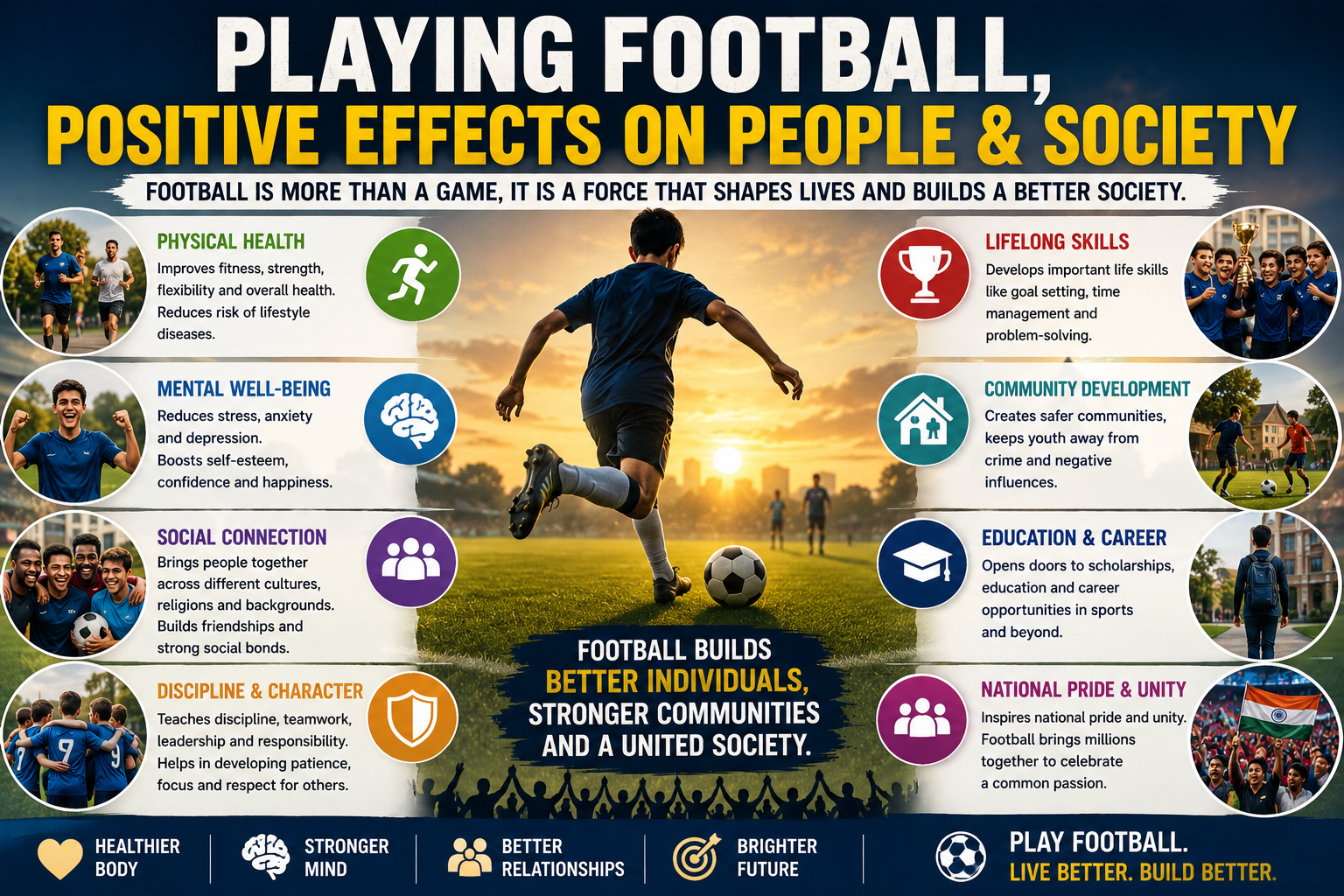
The FIFA World Cup promotes social integration by bringing diverse groups together.
Football matches create opportunities for:
- Community gatherings
- Public celebrations
- Cross-cultural interaction
- Collective participation
In multicultural societies, the FIFA World Cup often becomes a platform where different ethnic and cultural groups interact peacefully.
Thus, sports contribute to the spirit of society by fostering unity and cooperation.
FIFA World Cup and Consumer Society
Contemporary sociology studies consumer culture extensively.
The FIFA World Cup influences consumer behavior through:
- Jerseys
- Football merchandise
- Sports equipment
- Television subscriptions
- Travel packages
People often make purchasing decisions based on World Cup-related trends.
This illustrates how sports and consumer culture are closely interconnected in modern society.
Criticisms from a Sociological Perspective
While the FIFA World Cup has many positive impacts, sociology also identifies certain concerns:
- Commercialization of sports
- Excessive nationalism
- Economic inequality
- Rising ticket prices
- Environmental concerns
Some sociologists argue that excessive focus on sporting events may divert attention from social issues.
Therefore, sociology encourages a balanced understanding of both the benefits and limitations of the FIFA World Cup.
Conclusion
The FIFA World Cup is far more than a football competition. From a sociological perspective, the FIFA World Cup influences identity formation, entertainment, globalization, consumer behavior, national pride, youth culture, and social integration. Thinkers such as Emile Durkheim, Karl Marx, and Max Weber help us understand the deeper social meanings behind the FIFA World Cup.
The FIFA World Cup demonstrates how sports can unite societies, create collective emotions, shape cultural values, and influence everyday life. As one of the most watched events on Earth, the FIFA World Cup remains a powerful example of the relationship between sports and society, making it a fascinating subject for sociological analysis.
If you are searching for the best website for sociology, your search ends at Sociologus.com. Whether you are preparing for UPSC Sociology Optional, UGC NET Sociology, State PSC examinations, university exams, or simply interested in sociology, Sociologus.com is designed to be a one-stop destination for all your academic needs.
Read here….